Technology
m-PTFE GB (APV) Lining
The m-PTFE GB (APV) lining sheet is an internationally patented material that incorporates glass cloth into conventional fluororesin sheets.
It delivers lining performance that exceeds that of PTFE and PFA.
With advanced installation technology, Sun Fluoro System protects the interior of equipment from deterioration, supporting extended service life and maintaining the purity of process chemicals.

What is m-PTFE GB (APV) Lining?
Sun Fluoro System’s m-PTFE GB (APV) lining is a lining technology that utilizes the proprietary m-PTFE GB (APV) sheet.
This sheet is an internationally patented, innovative lining material featuring a structure that combines conventional fluororesin sheets with glass cloth.
To maximize its performance, it is applied using advanced technical expertise.
Manufactured through an internationally patented process using raw materials with a stable molecular structure and high molecular weight (m-PTFE M111 powder), the m-PTFE sheet is further enhanced by laminating glass cloth—resulting in the advanced m-PTFE GB (APV) lining material.
While maintaining the excellent chemical resistance of PTFE and PFA, it also offers superior resistance to wear and impact, along with strong adhesion to metal substrates.
These properties make it well suited for demanding environments such as chemical plants and semiconductor manufacturing equipment.
Its smooth surface also provides excellent cleanability, supporting extended equipment life and safe, stable operation.
Strengths
Design Flexibility
The m-PTFE GB (APV) lining sheet is manufactured using a process that is not constrained by tank size. This allows for flexible application to large-capacity equipment such as tanks, vessels, and large-diameter piping.
With minimal limitations on equipment scale or geometry, and supported by advanced installation technology, it achieves both high design flexibility and practical applicability.
Surface Smoothness
APV stands for Advanced Performance Vessel.
Through carefully selected materials and Sun Fluoro System’s superior installation quality, the inherent smoothness of fluororesin sheets is preserved.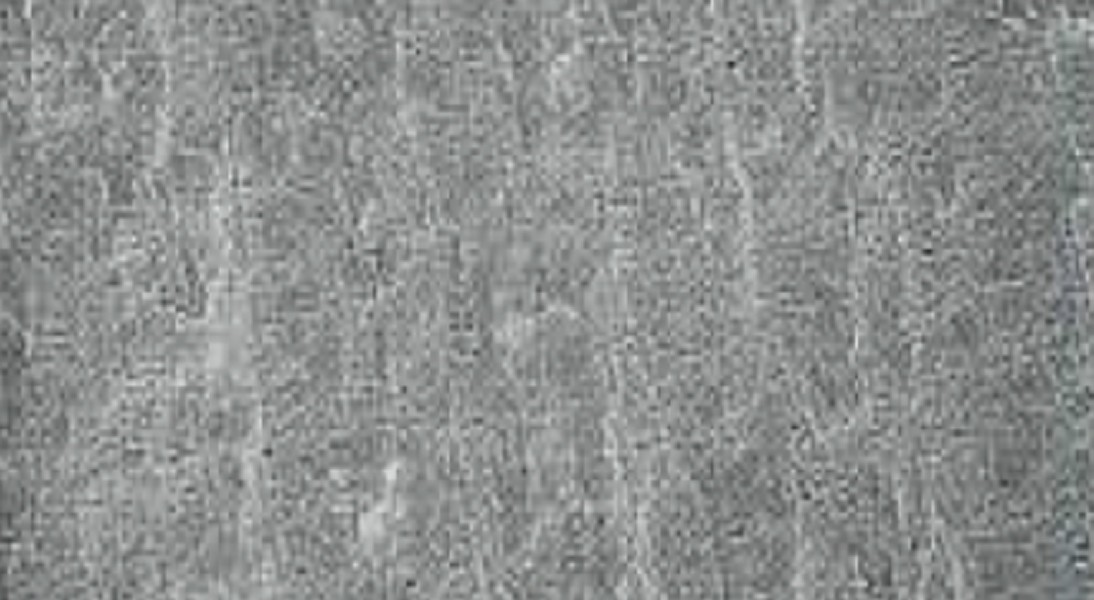
m-PTFE GB (APV) 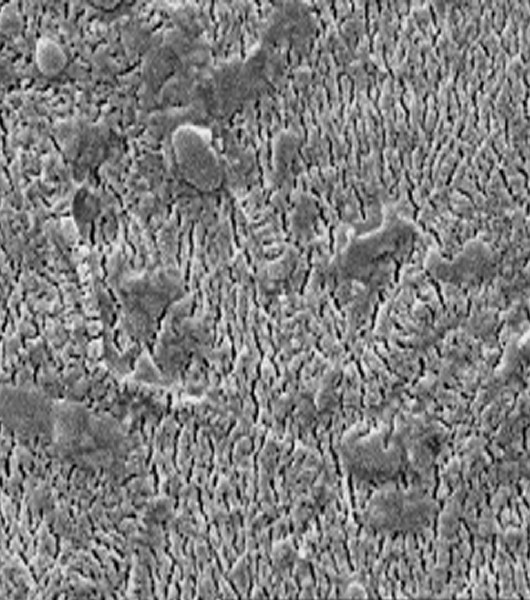
PTFE Other Material Options
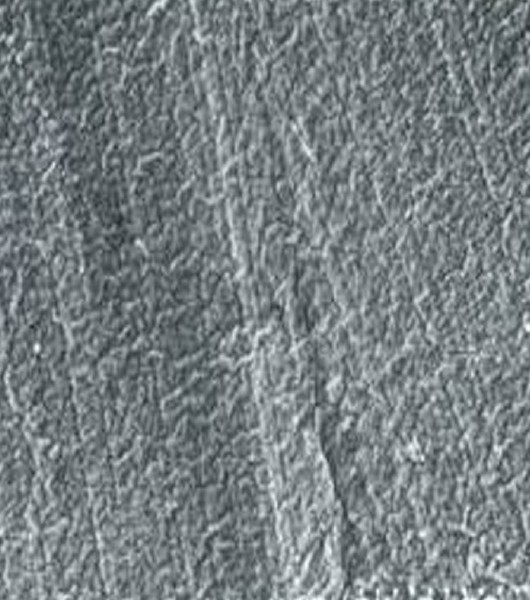
PFA Resistance to Chemical Permeation
Even fluororesin with excellent resistance to permeation may exhibit variations depending on the chemicals involved.
To evaluate this, an accelerated test was conducted using highly permeable 98% concentrated nitric acid.
The test tank was installed outdoors, and a comparative durability study was carried out across different types of fluororesin.
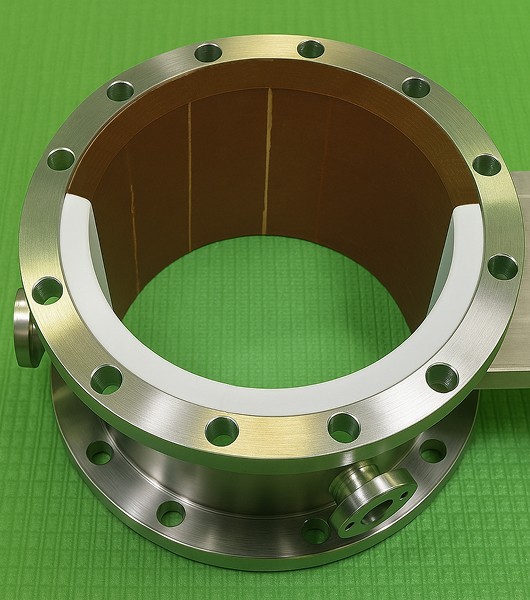
After an immersion test lasting 1.5 to 2 years, m-PTFE GB (APV) demonstrated outstanding durability.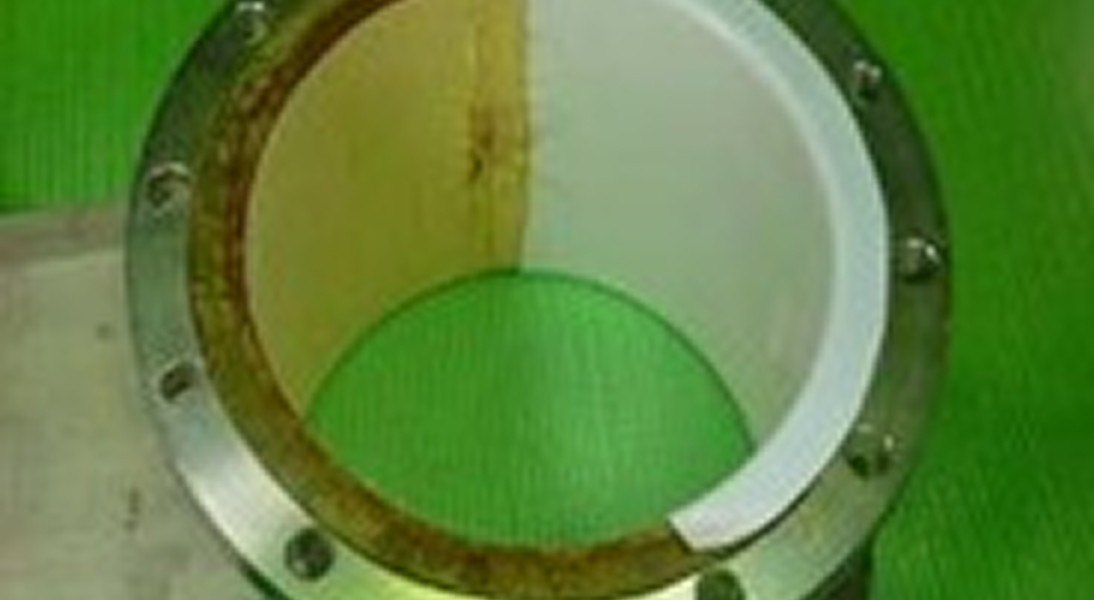
m-PTFE GB (APV) The adhesive showed no signs of degradation.
PTFE Penetration of concentrated nitric acid degraded the adhesive, pushing the inner lining near its usable limit.
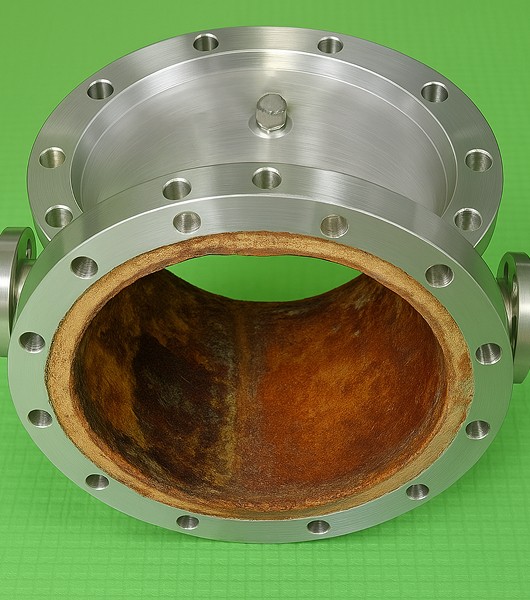
PFA Heavy permeation of concentrated nitric acid caused the inner lining to surpass its service limit.
Adhesion Stability
The use of high-strength glass fiber forms the foundation of the superior performance of fluororesin sheet lining materials.
Without the appropriate glass fiber, the stability of the lining cannot be ensured.
Only through the combination of advanced lining technology and properly selected materials can stable lining performance be maintained—even on equipment with curved surfaces.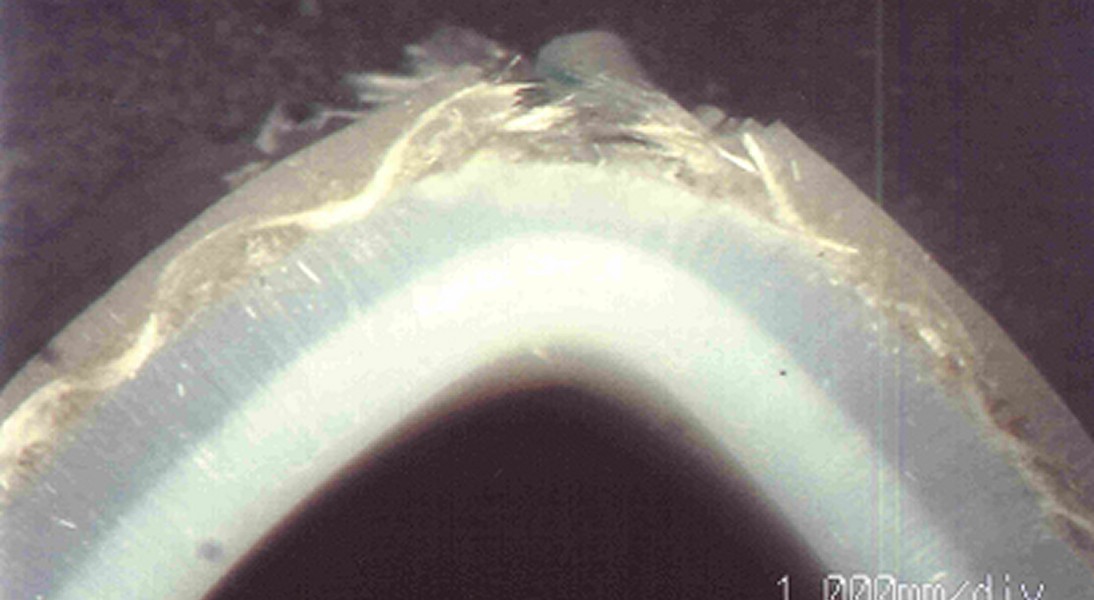
m-PTFE GB (APV) 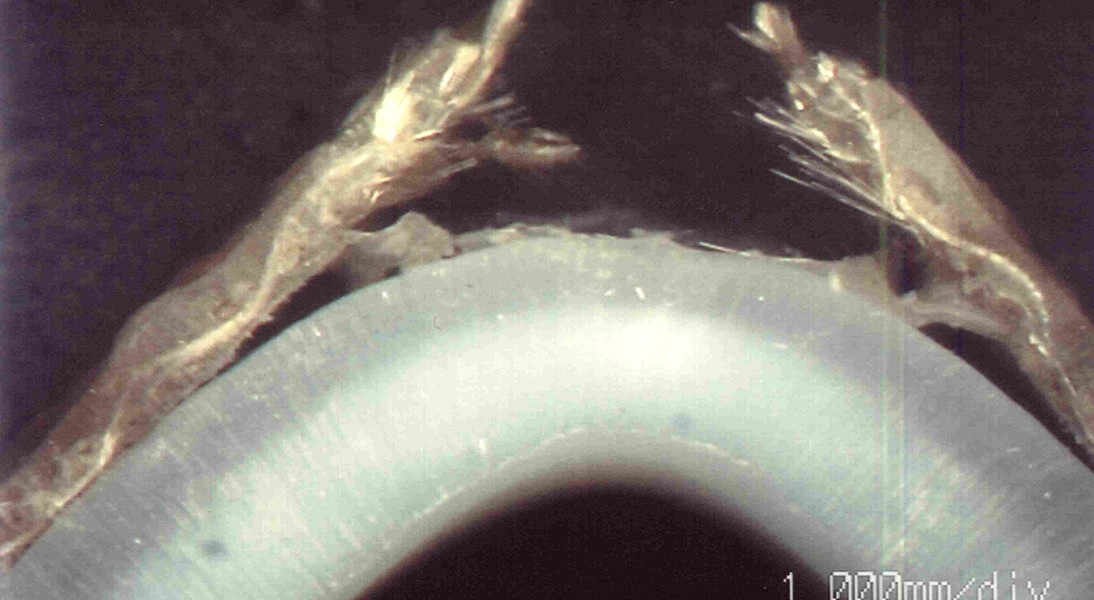
Unstable Laminated Products
Operating Conditions Terms of Use
- Usage Conditions Thickness Lineup
2 mm
2.4 mm (Standard)
3 mm (For permeation resistance, abrasion resistance)- Temperature
-40 ~ 150 ℃
Lining methods and adhesives vary depending on temperature conditions.Standard adhesive : < 100 ℃
Resin-based adhesive : 100~150 ℃
For conditions exceeding 150 ℃, loose lining is selected.- Pressure
Atmospheric pressure ~ 1 MPa (10 kg/cm²)
Please consult us for use under negative pressure (vacuum) or conditions exceeding the temperature range.
Chemicals used with
m-PTFE GB (APV) Lining Terms of Use
- Semiconductor / Solar Cell / LCD Industry
50 % Hydrofluoric acid, 98 % Sulfuric acid, 35 % Hydrochloric acid, Phosphoric acid, Mixed acid, Acetic acid
30 % Hydrogen peroxide aqueous solution, 30 % Ammonia aqueous solution, Potassium hydroxide solution, Ammonium fluoride solution
TMAH aqueous solution, Inorganic chemicals, Solvent-based chemicals- Chemicals / Alkali Industry
Hydrochloric acid, Diluted sulfuric acid, Sodium hydroxide aqueous solution, Sodium hypochlorite solution
- Plating Industry
Chromic acid, 70 % Sulfuric acid
- Iron & Steel / Surface Treatment Industry
Mixed acid (Hydrofluoric acid + Sulfuric acid), 70 % Sulfuric acid, Hydrochloric acid
- Metal Recovery
Aqua regia (Concentrated hydrochloric acid + Concentrated nitric acid)
PTFE Lining
PTFE (Polytetrafluoroethylene) is a fluororesin with excellent resistance to chemicals and high temperatures, making it suitable for use in extremely harsh environments.
Its ability to withstand a wide temperature range ensures stable performance even under significant temperature fluctuations caused by heating and cooling.
In addition, its low coefficient of friction creates a smooth surface that resists material adhesion, making it ideal for applications requiring non-stick properties, such as manufacturing lines and piping systems.

Features
- PFA welding using PFA dispersion; weld strength may vary depending on the installer’s skill level
- Stable performance across a wide temperature range (approximately −20 to +230°C)
- Excellent non-stick and low-friction properties due to an extremely low coefficient of friction
- Minimal impact from heating and cooling after forming
- Excellent electrical insulation properties
Strengths
- Delivers long-term performance in harsh corrosive environments
- Reduces buildup, enhancing cleaning and maintenance efficiency
- Can be applied to existing equipment, minimizing upgrade costs
Weaknesses
- Compared to m-PTFE, chemicals are more likely to permeate through voids and amorphous regions formed during sintering
- Due to differences in molecular structure with PFA (used as the welding material), direct welding is not possible; PFA welding is performed via PFA dispersion, and weld strength may vary depending on the installer’s skill level
- Adhesion strength may vary depending on operating conditions and quality control
PFA Lining
PFA (Perfluoroalkoxy Alkane) offers chemical resistance similar to PTFE while being easier to process.
It allows uniform sheet application even on tanks and piping with complex geometries, providing greater design flexibility and enabling a wide range of applications.
Features
- Offers high chemical resistance comparable to PTFE
- Easy to form and process, allowing application to curved and complex geometries
- Low friction and non-stick properties improve cleanability and material flow
- Maintains stable performance over a wide temperature range (approximately −40 to +230°C)
- Excellent electrical insulation properties
Strengths
- Enables uniform lining even on complex geometries
- Maintains excellent chemical and heat resistance
- Offers high design flexibility, making it suitable for a wide range of equipment
- Exhibits minimal performance degradation over long-term use, contributing to stable operation
Weaknesses
- Due to its relatively low density (specific gravity), chemicals such as hydrochloric acid and hydrofluoric acid are more likely to permeate compared to PTFE and m-PTFE
- Unlike m-PTFE/PFA welding, welding is performed between the same materials, making weld quality dependent on the installer’s skill level